When you click the link, it will take you to the corresponding page.
金魚コース
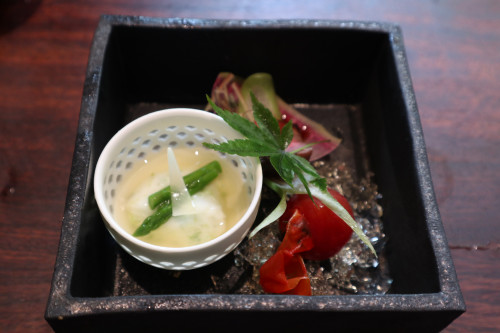
前菜三種盛合せ
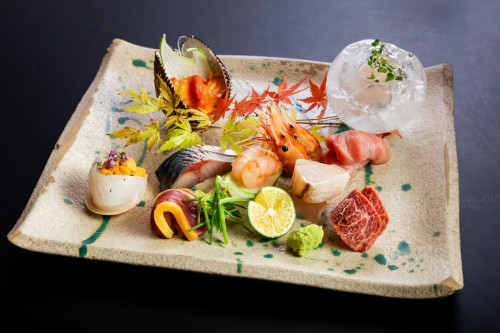
馬肉と鮮魚の刺身七点盛り合わせ
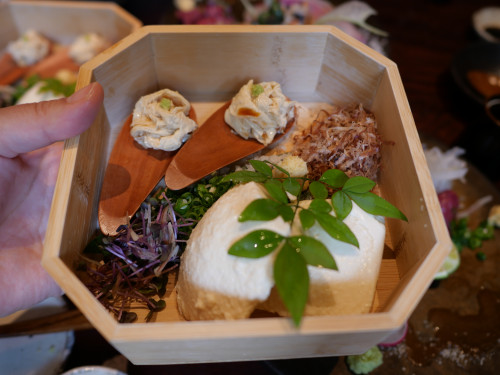
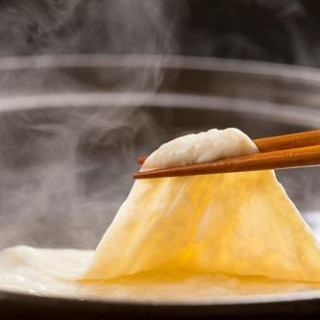
なめらか豆腐と汲み上げ湯葉の合い盛り
One of the Japanese ingredients that’s hard to identify without explanation is Yuba, also known as soy milk skin. As the name suggests, when soy milk is gently heated, a thin film forms on the surface where it meets the air. This delicate film is lifted with bamboo sticks to create yuba. The Japanese word “湯葉” literally means “hot water leaf,” with “湯” meaning “boil” and “葉” meaning “leaf,” describing its thin, leaf-like texture. When eaten fresh with wasabi soy sauce or used in dishes, it’s called Nama Yuba (fresh yuba). When dried, it becomes Kansō Yuba (dried yuba), which comes in various forms such as flat sheets (Hira Yuba), knotted yuba (Musubi Yuba), and rolled yuba (Maki Yuba).
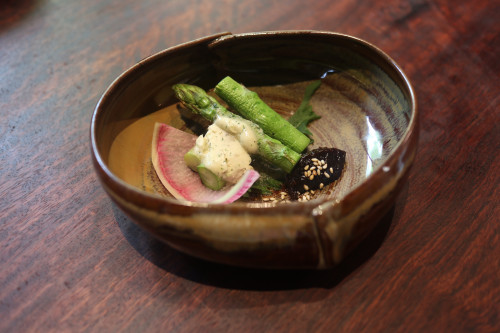
旬野菜の一品
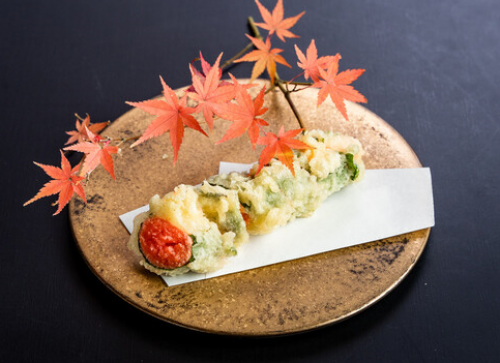
明太子の天ぷら
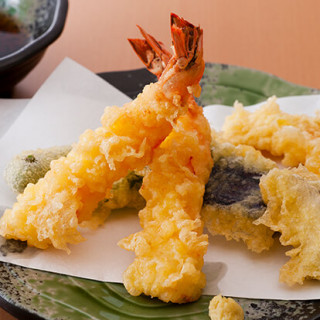
Tempura is a dish made by dipping ingredients in a batter of flour, eggs, and water and then frying them. It is one of Japan's representative dishes. The name "tempura" is sometimes added after the name of the ingredient, such as "ebi-tempura" for shrimp tempura, "nasu-tempura" for eggplant tempura, and "chikuwa-tempura" for fish cake tempura. Tempura was originally a commoner's dish sold by street vendors. It is still widely available at supermarket delis and side dish stores and is a popular and approachable dish enjoyed as home cooking. However, specialized tempura restaurants have also increased. Tempura is also used in course dishes at high-end traditional Japanese restaurants called "ryotei," creating an image of a high-end dish. Seafood, vegetables, and mushrooms are the most commonly used ingredients for tempura, but nowadays, various ingredients are used to make tempura, including cheese, soft-boiled eggs, and bananas. When eating tempura, it is usually dipped in "tentsuyu," a soy sauce-based broth, or eaten by dipping it in salt. Some people also put grated radish in tentsuyu 天つゆ, or sprinkle lemon or yuzu juice directly on the tempura, which makes the oily tempura taste cleaner. Depending on the restaurant, the salt used for dipping may be variously flavoured, such as matcha salt, yuzu salt, or curry salt. There are also many dishes that use tempura as an ingredient. One of the most popular ones in Japan is "ten-don," a dish in which tempura is served on a bowl of rice with sauce poured over it. There are also "ten-musu," in which tempura is placed inside onigiri (rice balls), and "ten-soba,天そば" in which tempura is placed on top of soba (buckwheat noodles).
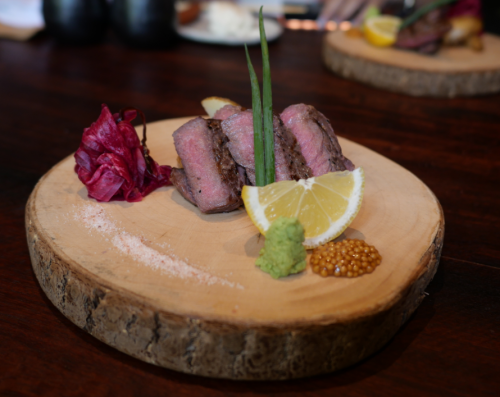
和牛炭火焼き
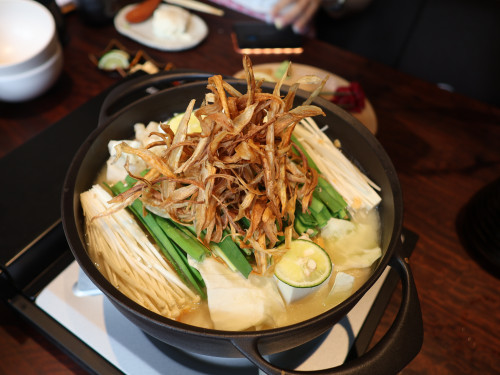
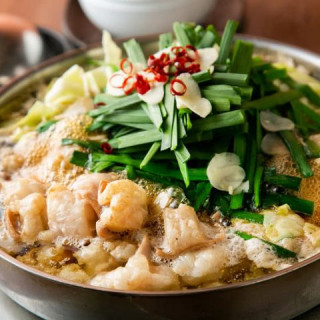
もつ鍋
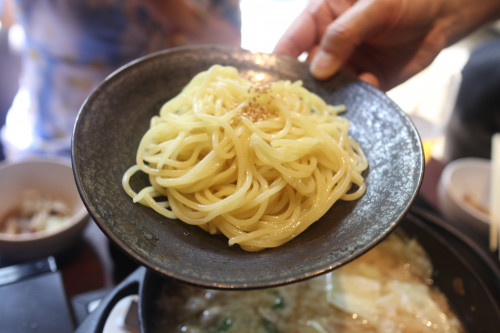
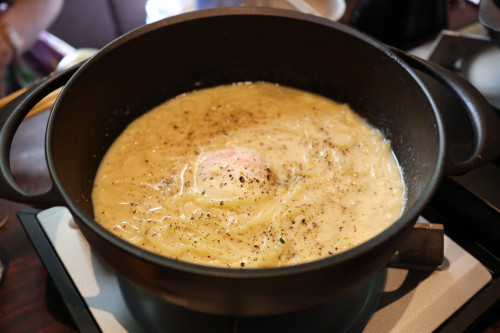
ちゃんぽん又は雑炊
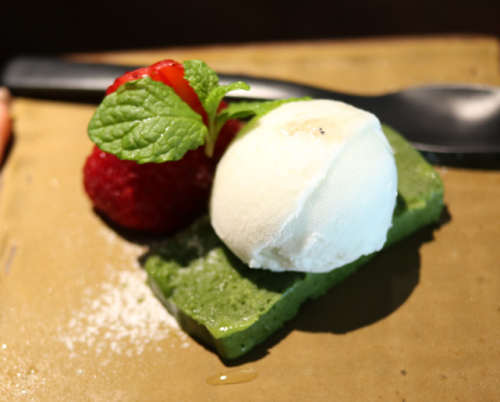
季節の甘み